The Best Online Trading Platforms: Matching Technology to Your Strategy
The democratization of finance has a double-edged sword. On one side, access to the financial markets has never been cheaper or easier. On the other, the sheer volume of choices can be paralyzing. A quick search for “trading apps” yields hundreds of results, all promising low fees, instant execution, and superior tools.
However, for the serious market participant, the brokerage account is not just an app; it is a workspace. It is the cockpit from which you navigate the global economy. Choosing the best online trading platforms is not about finding the one with the most colorful interface or the best celebrity endorsement. It is about finding the infrastructure that aligns specifically with your goals, your risk tolerance, and your methodology.
A scalper needs speed; a value investor needs data. Using a Ferrari to plow a field is just as ineffective as driving a tractor in a Formula 1 race. To succeed, you must match your machine to your mission.
Defining “Best”: The Three Archetypes
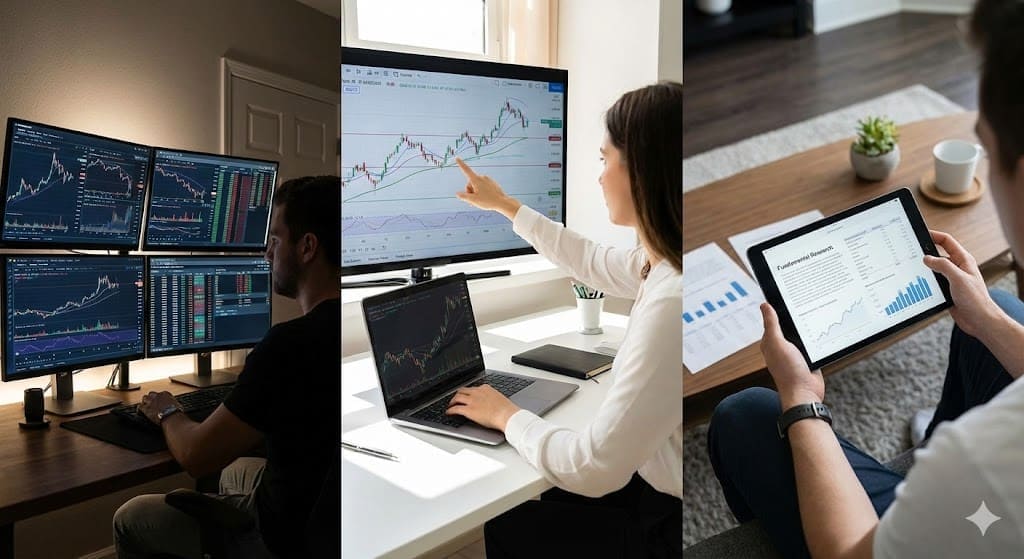
There is no single “best” platform. There is only the best platform for you. Generally, traders fall into three buckets, and the software requirements for each are vastly different.
1. The Active Day Trader
For this group, time is money, literally. They need Direct Market Access (DMA).
- Priorities: Speed, Hotkeys, Level 2 Data.
- The Dealbreaker: Latency. If the platform lags during the opening bell, it is useless.
- The Platform Style: Complex, data-heavy desktop software (e.g., Lightspeed, DAS Trader).
2. The Swing Trader / Technician
This group holds positions for days or weeks. They rely heavily on technical stock trading strategies.
- Priorities: Advanced charting, custom indicators, clean user interface.
- The Dealbreaker: Poor charting tools. If you can’t draw a Fibonacci retracement easily, the platform fails.
- The Platform Style: robust web-based or desktop charting suites (e.g., TradingView, Thinkorswim).
3. The Long-Term Investor
This group builds wealth over years. They are less concerned with seconds and more concerned with the analysis of stocks from a fundamental perspective.
- Priorities: Research reports, screener tools, retirement planning calculators.
- The Dealbreaker: Lack of fundamental data. They need access to balance sheets and earnings call transcripts.
- The Platform Style: Web portals with deep research libraries (e.g., Fidelity, Schwab).
The Engine of Execution: Why Speed Matters
When evaluating the best online trading platforms, you must look under the hood at “Execution Quality.”
Many “free” trading apps generate revenue through Payment for Order Flow (PFOF). This means they sell your order to a wholesaler. While this allows for zero-commission trading, it often results in slightly slower execution and worse pricing.
For a buy-and-hold investor, saving $5 on commissions is worth a slightly worse price. But for a day trader executing highly sensitive stock trading strategies, that split-second delay can turn a winner into a loser. Professional platforms charge commissions, but they route your order directly to the exchange, ensuring you get the best possible fill.
Tools for the Analysis of Stocks
A platform is only as good as the data it provides. The modern trader needs to synthesize two types of analysis, and the best platforms integrate both seamlessly.
Technical Analysis Integration You shouldn’t have to leave your broker to look at a chart. The top platforms allow you to overlay hundreds of indicators, from RSI to Ichimoku Clouds, directly onto your trading screen. They allow for “chart trading,” where you can drag and drop your stop-loss line directly on the visual graph.
Fundamental Analysis Integration For the analysis of stocks on a deeper level, look for platforms that integrate third-party research. Can you see the analyst ratings from Morningstar or Credit Suisse inside the app? Can you view a 10-year history of the company’s revenue growth? The best platforms act as a library, providing the historical context needed to make informed decisions.
Mobile vs. Desktop: The Hybrid Approach
In 2026, the debate between “Mobile App” vs. “Desktop Software” is over. You need both.
The desktop is for work. It is where you run your scans, build your watchlists, and execute your complex orders during the session. The mobile app is for management. It is for checking positions while you are at lunch or closing a trade if an emergency happens.
The best online trading platforms have perfect synchronization between the two. If you draw a trendline on your desktop in New York, it should appear on your iPad in Tokyo instantly.
Regulation and Security
Finally, never compromise on safety. The flashiest app is worthless if it is unregulated. Ensure your platform is backed by a major regulatory body (like the SEC/FINRA in the US, or the FCA in the UK). Look for SIPC insurance, which protects your capital if the brokerage itself goes bankrupt.
The search for the right platform is the first step in your professional journey. Don’t just download the most popular app in the store. Audit your own needs. Are you a high-frequency scalper needing raw speed? Or are you a thoughtful strategist needing deep data for the analysis of stocks? Once you define your style, the choice becomes clear. The right tool doesn’t make you a profitable trader, but it removes the obstacles preventing you from becoming one.
Frequently Asked Questions
Can I use multiple trading platforms?
Yes, and many pros do. You might use one platform (like TradingView) for unparalleled charting and analysis of stocks, and a different platform (like Interactive Brokers) for the actual trade execution to get better margin rates or global access.
What is the best platform for beginners?
Beginners should look for platforms that prioritize education and user experience over raw speed. Platforms that offer “Paper Trading” (simulators) are essential for practicing stock trading strategies without risking real money.
Do professional platforms cost money?
Yes. While many retail apps are free, professional “Direct Access” software often charges a monthly platform fee (e.g., $100-$200) and data fees. However, these fees are often waived if you generate enough commissions through active trading.
Why do my charts look different on different platforms?
Data feeds vary. Some platforms use “composite” data from all exchanges, while others might only show data from one specific exchange (like BATS). For the most accurate technical analysis, ensure you are subscribed to real-time, comprehensive data packages.
Is it safe to link my bank account to these platforms?
If the platform is a regulated, top-tier brokerage, yes. They use bank-level encryption. However, always enable Two-Factor Authentication (2FA) to protect your account from unauthorized access.
Can I trade international stocks on US platforms?
It depends on the broker. Basic apps usually limit you to US stocks. The best online trading platforms for global macro traders will offer access to international exchanges (London, Tokyo, Hong Kong), though this often requires a more advanced account approval process.
Comunidade
Plataformas de trading
Serviços
Artigos
Comunidade
Plataformas de trading
Serviços



Termos e condições

Política de AML
Política de retirada
Política de reembolso
Divulgação de riscos
Direitos autorais © 2026. Todos os direitos reservados.
Há risco de perda ao negociar moedas estrangeiras, e isso não é adequado para todos. A Tradeview não se responsabiliza por quaisquer ganhos ou perdas nas taxas de câmbio ou transações durante qualquer operação.
Os serviços e produtos oferecidos pela Tradeview Markets não estão sendo oferecidos nos Estados Unidos (EUA) e não estão sendo oferecidos a pessoas dos EUA, conforme definido pela legislação dos EUA. As informações contidas neste site não são direcionadas a residentes de qualquer país onde a negociação de FX e/ou CFDs seja restrita ou proibida por leis ou regulamentos locais.
Os CFDs são instrumentos complexos e envolvem um alto risco de perder dinheiro rapidamente devido ao uso de alavancagem. 64% das contas de investidores de varejo perdem dinheiro ao negociar CFDs com a Tradeview. Você deve considerar se entende como os CFDs funcionam e se pode arcar com o alto risco de perder seu dinheiro.
Sede Tradeview Financial Markets S.A.C: Calle Los Alcanfores No. 495 Int. 505 Urb. Leuro Lima. Lima, Miraflores.
Sede Tradeview Ltd.: 13 Genesis Close, 4º andar, sala 422, Ilhas Cayman, KY1-1110
Aviso de alto risco: O comércio de câmbio envolve um alto nível de risco que pode não ser adequado para todos os investidores. A alavancagem cria risco adicional e exposição à perda. Antes de decidir negociar câmbio, considere cuidadosamente seus objetivos de investimento, nível de experiência e tolerância ao risco. Você pode perder parte ou todo o seu investimento inicial; não invista dinheiro que você não pode perder. Informe-se sobre os riscos associados ao comércio de câmbio e busque o aconselhamento de um consultor financeiro ou fiscal independente se tiver dúvidas.
Aviso de aconselhamento: A Tradeview fornece referências e links para blogs selecionados e outras fontes de informações econômicas e de mercado como um serviço educacional para seus clientes e prospects, e não endossa as opiniões ou recomendações dos blogs ou outras fontes de informação. Clientes e prospects são aconselhados a considerar cuidadosamente as opiniões e análises oferecidas nos blogs ou em outras fontes de informação, no contexto da análise e tomada de decisão individual do cliente ou prospect. Nenhum dos blogs ou outras fontes de informação deve ser considerado como um histórico de desempenho. O desempenho passado não é garantia de resultados futuros, e a Tradeview aconselha especificamente os clientes e prospects a revisar cuidadosamente todas as alegações e representações feitas por consultores, blogueiros, gestores de fundos e fornecedores de sistemas antes de investir qualquer fundo ou abrir uma conta com qualquer corretora de Forex. Qualquer notícia, opinião, pesquisa, dados ou outra informação contida neste site é fornecida como um comentário geral sobre o mercado e não constitui aconselhamento de investimento ou negociação. A Tradeview isenta-se expressamente de qualquer responsabilidade por perda de capital ou lucros sem limitação, que possam surgir direta ou indiretamente do uso ou confiança nessas informações. Como com todos esses serviços de aconselhamento, os resultados passados nunca são garantia de resultados futuros.