Online Brokerage for Beginners: Choosing the Best Forex Trading Platform
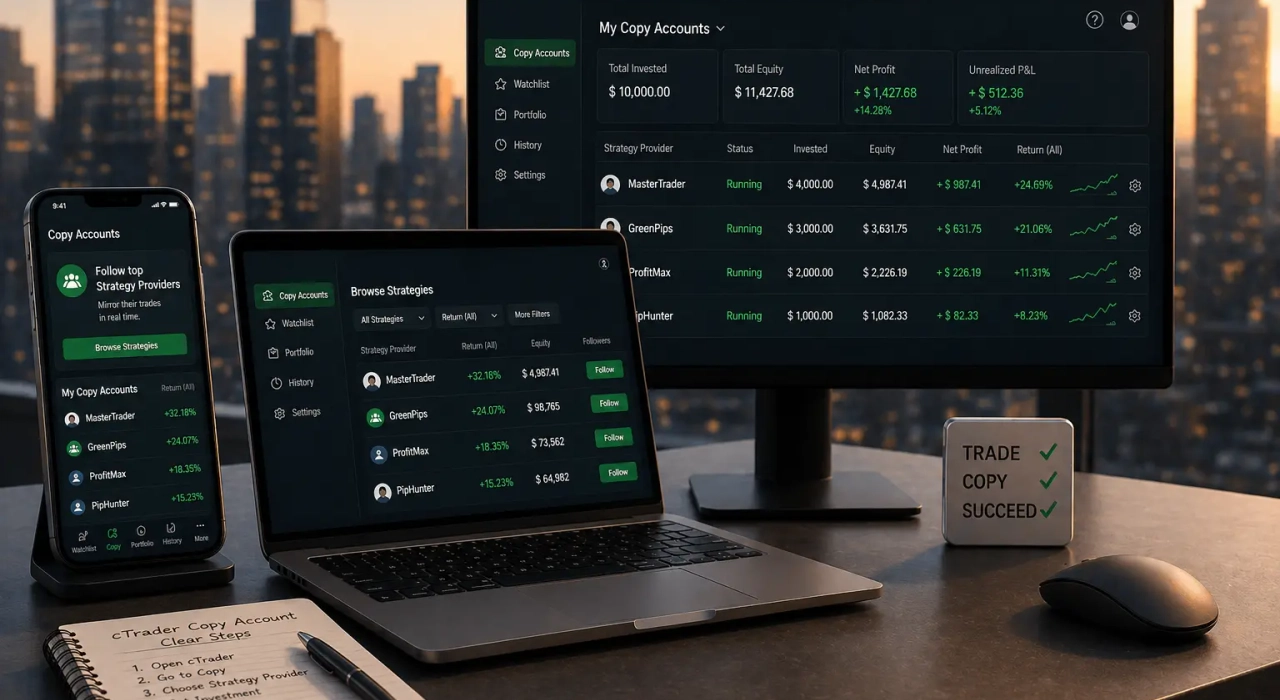
You are hunting for the best forex trading platform for beginners, and part of that search means comparing it against any online brokerage for beginners you have already looked at. The right pick makes entries simple, shows risk in cash before you click, and teaches you steadily.
We will map what “best” means for a new trader, show how an online brokerage translates to the forex world, outline the easiest forex trading platform traits, and show how to select a forex broker with educational tools that actually help you improve.
“If you can explain the risk in one sentence, the trade is ready.”
What Does “Online Brokerage for Beginners” Mean in Forex?
An online brokerage is simply the account and platform combination you use to buy and sell an asset over the internet — no branch visit, no phone order. Most of what gets written about “the best online brokerage for beginners” focuses on stocks, ETFs, and mutual funds. Forex works on the same core idea, with a few differences that matter more when you are new:
- You trade currency pairs instead of shares, so pricing moves in pips, not dollars per share.
- Positions are typically leveraged, which changes how you size risk from day one.
- Markets run nearly 24 hours across sessions, so “when” you trade matters as much as “what.”
None of that makes forex harder to start — it just means an online brokerage for beginners in forex should be judged on slightly different criteria than a stock account: cash risk on the ticket, clear spreads, and a broker that teaches leverage before you ever use it.
What “Best” Means When You Are New
“Best” is not the longest feature list. “Best” is the platform that lets you repeat a safe routine every day.
- You can size trades in dollars, not guesses.
- Stops and targets attach automatically as a bracket.
- Spreads and fees are clear in your local currency.
- Tutorials, checklists, and webinars are easy to find.
- Exports match statements line by line so you can audit your results.
“Choose tools you can audit, not just admire.”
The Easiest Forex Trading Platform Looks Like This
| Area | Beginner-friendly behavior | Why it matters |
|---|---|---|
| Order ticket | Shows cash risk before submit | Prevents accidental oversizing |
| Bracket presets | Stop and target attach by default | Exit discipline without hesitation |
| One screen focus | Chart plus ticket plus positions only | Less clutter, fewer mistakes |
| Guided mode | Tooltips and inline tutorials | Learn while you click |
| Mobile parity | Place, edit, exit with the same logic | No new learning curve on phone |
| Demo to live bridge | Same layout on both modes | Practice transfers to real money |
If you feel lost using a demo trading account, you will feel worse live. Keep the workflow simple — a platform like MetaTrader 5 keeps the same layout across demo and live, which removes one variable while you are still learning.
Must-Haves From a Forex Broker With Educational Tools
| Resource | What “good” looks like | Quick test |
|---|---|---|
| Starter course | Short videos and one-page PDFs in order | Can you finish the track in a weekend |
| Live sessions | Weekly office hours with replays | A schedule you can attend in your time zone |
| Playbooks | Printable checklists for entries and reviews | One sheet you can tape near your screen |
| Platform tours | Click-by-click guides in the actual UI | You can place a bracketed order in two minutes |
| Risk lessons | Cash sizing, per day loss cap, journaling | Teaches money first, signals second |
“Education lowers churn. A good lesson pays for itself in fewer bad clicks.”
How to Vet a Broker Before You Fund an Online Brokerage Account
Before you fund any online brokerage for beginners — forex or otherwise — confirm who actually stands behind it.
- Check registration. In the US, forex dealers and introducing brokers must be registered with the CFTC and be NFA members. You can look up any firm’s status for free using the NFA’s BASIC verification tool.
- Read the fine print on execution. Know whether your broker acts as principal (dealing desk) or routes to liquidity providers, and how that affects fills during news.
- Confirm fund segregation. Client funds should be held separately from the firm’s operating capital.
- Test support before you need it. Send a real question during your evaluation window and time the reply.
A few extra minutes here does more for your outcome than any indicator ever will.
Quick Comparison Framework Before You Fund
Score each candidate 1 to 5. Keep it honest and simple.
| Category | Weight | Platform A | Platform B |
|---|---|---|---|
| Cash risk shown on ticket | 20 | ||
| Bracket presets and OCO quality | 15 | ||
| Clarity of spreads and fees | 10 | ||
| Education depth and schedule | 15 | ||
| Demo quality and export parity | 15 | ||
| Mobile usability | 10 | ||
| Support during session hours | 10 | ||
| Status page and incident history | 5 | ||
| Total | 100 |
The best forex trading platform for beginners is the one that wins this sheet for your schedule and learning style — and the same sheet works if you are still comparing it against a stock-focused online brokerage.
Demo Plan That Actually Teaches You
A demo is a rehearsal, not a game. Treat it like live money with rules.
- Pick two pairs that are liquid in your window, for example EURUSD and USDJPY, both available on the forex markets page.
- Set a fixed cash risk per trade, such as 20 to 40 dollars.
- Attach brackets by default so your stop and target are automatic.
- Trade only your real session for 7 to 10 days.
- Record three numbers each entry: spread at click, slippage, and time to fill.
- Export and reconcile totals from the platform and confirm they equal the statement.
If demo exports cannot match statements, live reporting will be painful. Pick another platform.
Two Beginner Setups That Travel Across Pairs
Opening Drive Pullback
During your active session, mark the first directional push. Wait for a small pullback that pauses near a short-term level and enter with your bracket attached. This helps you avoid chasing the first spike.
Value Pullback to a Mean Band
Confirm direction on a higher timeframe. Mark a value zone such as VWAP or a fair mean band. Take the first patient pullback that pauses. This keeps entries aligned with the day’s tone.
“Trade the retest, not the burst.”
Ticket Math in Plain Cash
Let the platform do the arithmetic. You set risk in dollars and the system converts to size — most brokers, including TVM’s calculator suite, will do this for you automatically once you know your inputs.
- Risk per trade: 30 dollars
- Planned stop: 10 pips
- Dollar per pip on a mini lot: 1 dollar
- Size = 30 ÷ (10 × 1) = 0.3 mini lots
“Cash language travels across assets. Keep it.”
Guardrails That Protect Your First Month
- Per day loss cap that pauses new orders until reset
- Max position size per pair and per ticket
- Two attempts per idea, then stand down
- Session filters so you skip thin or news-heavy minutes
- Plain messages when rules fire so you know what happened
Examples that help
- “Order blocked. Free margin below threshold. Reduce size or fund.”
What Costs to Watch, and How
Treat costs like ingredients and measure them for 20 sessions.
| Cost line | Where it shows | Practical move |
|---|---|---|
| Spread and commission | Every fill | Favor overlap hours and avoid chasing |
| Slippage | Openings and data minutes | Prefer retests and reduce size on prints |
| Swaps or funding | Holding trades overnight | Match hold time to cost or use day holds |
| Data or add-ons | Tools you rarely use | Keep only what changes outcomes |
“Cost clarity turns uncertainty into a choice you can live with.”
Signs You Found the Best Platform to Trade Futures Later Too
Even if you start with forex, a good beginner platform can grow with you.
- The order ticket handles indices or metals with the same cash sizing.
- Reports still match exports when you add products.
- Education continues with paths for intermediate skills.
- Support responds quickly during the hours you trade.
Browsing the full trading platforms lineup before you commit is worth ten minutes — it tells you whether your first online brokerage can also carry you into other markets later.
Growth without a new learning curve is a hidden superpower.
A Day You Will Recognize
Your window opens. EURUSD builds a steady push, then breathes. You take the pullback with a bracket attached. Risk equals your preset number, not a guess. Twenty minutes later USDJPY prints a similar pattern. Same routine, smaller size. You skip a news minute because your calendar reminder pops up. That evening the platform’s statement equals your CSV export line by line. No detective work. That is life on the best forex trading platform for beginners — the closest thing to the easiest forex trading platform when paired with a forex broker with educational tools that teaches as you trade.
FAQ
How long should I stay on demo?
Seven to ten sessions in your real window is enough to learn the workflow and see normal slippage. Extend if volatility was unusually low or you missed days.
What if I feel overwhelmed by features?
Hide extra panels. Keep charts, tickets, positions, and nothing else. Simpler screens reduce errors and make you faster.
Can I learn without a forex broker with educational tools?
You can, but it is slower. A good curriculum and weekly Q&A save months of confusion and prevent avoidable losses.
What is the single best feature for beginners?
Cash risk on the ticket before submit. If you cannot see dollars, everything else is guesswork.
Should I hold trades overnight as a beginner?
Not until you understand swap or funding costs and how they affect your plan. Many new traders do better with day holds and clean exits.
When do I scale size?
After two calm weeks where costs, rules, and behavior match your plan. Increase slowly and keep your per day cap.
Is a forex trading platform the same as an online brokerage account?
Functionally, yes — both are the account and software combination you use to place trades online. The difference is what you can trade and how positions are priced: a forex-focused online brokerage for beginners is built around currency pairs, pip-based pricing, and leverage, while a general brokerage account usually centers on stocks, ETFs, and mutual funds.
Community
Trading platforms
Services
Articles
Community
Trading platforms
Services




Copyright © 2026. All rights reserved.
There is a risk of loss in trading foreign currencies and it is not suitable for everyone. Tradeview is not responsible for any gains or losses on currency rates or exchanges during any transaction.
The services and products offered by Tradeview are not being offered within the United States (US) and not being offered to US Persons, as defined under US law. The information on this website is not directed to residents of any country where FX and/or CFDs trading is restricted or prohibited by local laws or regulations.
CFDs are complex instruments and come with a high risk of losing money rapidly due to leverage. 64% of retail investors' accounts lose money when trading CFDs with Tradeview. You should consider whether you understand how CFDs work and whether you can afford to take the high risk of losing your money.
Headquarters Tradeview Ltd.: 13 Genesis Close, 4th Floor, Suite 422, Cayman Islands
High Risk Warning: Foreign exchange trading carries a high level of risk that may not be suitable for all investors. Leverage creates additional risk and loss exposure. Before you decide to trade foreign exchange, carefully consider your investment objectives, experience level, and risk tolerance. You could lose some or all your initial investment; do not invest money that you cannot afford to lose. Educate yourself on the risks associated with foreign exchange trading and seek advice from an independent financial or tax advisor if you have any questions.
Advisory Warning: Tradeview provides references and links to selected blogs and other sources of economic and market information as an educational service to its clients and prospects and does not endorse the opinions or recommendations of the blogs or other sources of information. Clients and prospects are advised to carefully consider the opinions and analysis offered in the blogs or other information sources in the context of the client or prospect's individual analysis and decision making. None of the blogs or other sources of information is to be considered as constituting a track record. Past performance is no guarantee of future results and Tradeview specifically advises clients and prospects to carefully review all claims and representations made by advisors, bloggers, money managers and system vendors before investing any funds or opening an account with any Forex dealer. Any news, opinions, research, data, or other information contained within this website is provided as general market commentary and does not constitute investment or trading advice. Tradeview expressly disclaims any liability for any lost principal or profits without limitation which may arise directly or indirectly from the use of or reliance on such information. As with all such advisory services, past results are never a guarantee of future results.