Please note that deposits and withdrawals via Bitwallet are no longer available. Please use alternative methods going forward.
Level Up Your Trading Strategies With a Process You Can Repeat
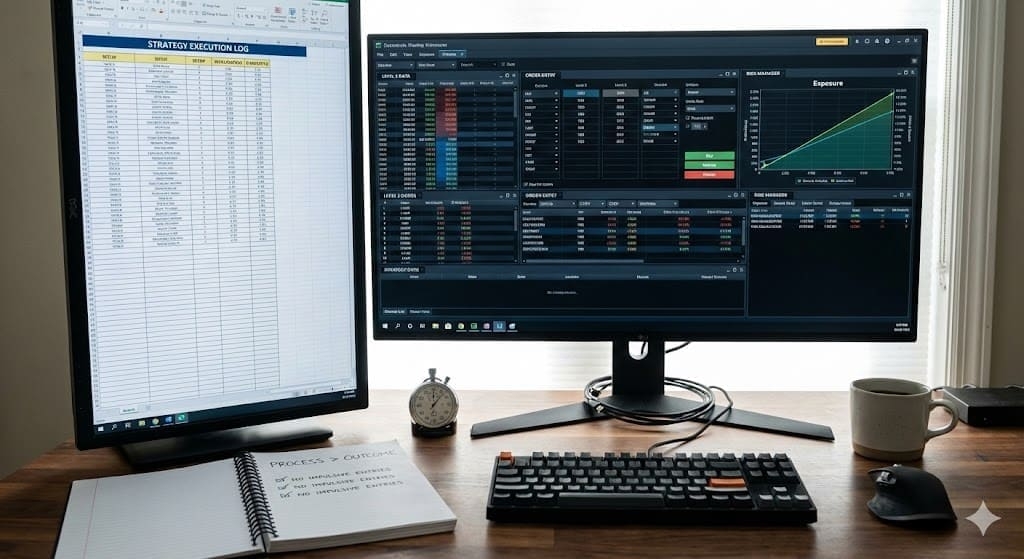
Most traders try to improve by adding more: more indicators, more alerts, more markets, more opinions. The irony is that progress usually comes from subtraction. The fastest way to level up your trading strategies is to tighten your process so the same setup produces similar decisions across different days.
A customizable trading environment helps because it reduces friction between you and your plan. If your tools match your workflow, you make fewer mistakes under pressure. Some active traders also consider specialized platforms such as the Takion trading platform for speed, order control, and workflow configuration, depending on their market focus and access. The real question is not which platform is “best.” It is whether your environment makes discipline easier.
“Strategy improves when execution becomes boring.” (Citation: trading journal note)
This guide is practical: the habits that separate random trading from repeatable trading, how to design a customizable environment, and how to evaluate tools (including Takion) without getting distracted by hype.
The real meaning of leveling up
“Leveling up” is not just making more money in a good month. It is improving these three things:
- Decision quality: fewer impulsive entries, clearer invalidation points
- Execution quality: correct sizing, clean order placement, fewer errors
- Review quality: actionable feedback loops, not vague self-criticism
When those improve, PnL tends to follow over time, but not always immediately.
The leveling-up checklist
A trader is leveling up when:
- Losses are smaller and more consistent
- Wins come from planned setups, not lucky spikes
- You can explain what you did and why
- You break fewer rules per week
The common reasons strategies stall
Most trading strategies stall for reasons that have nothing to do with the setup itself.
Reason 1: The rules are not specific enough
If you cannot define your entry and exit objectively, you cannot measure improvement.
Quick fix:
- Rewrite rules in “if this, then that” language
- Define invalidation clearly
- Define size from risk, not from confidence
Reason 2: Too many markets dilute focus
Switching between products increases cognitive load and makes pattern recognition noisier.
Quick fix:
- Pick one main market and one backup market
- Trade them for a fixed sample window (for example, 20 sessions)
Reason 3: Execution mistakes overwhelm edge
A strategy with a small edge can be destroyed by sloppy order placement, inconsistent sizing, and ignoring costs.
Quick fix:
- Use order templates
- Standardize position sizing
- Track slippage and spread behavior
“A small edge survives only inside a clean process.” (Citation: performance review note)
Power comes from a customizable trading environment
A customizable trading environment is not about fancy screens. It is about reducing friction so you can follow your plan under stress.
What “customizable” should actually mean
- Your layouts match your workflow
- Your key tools are one click away
- Your order entry minimizes mistakes
- Your alerts reduce screen-staring
- Your reporting supports review
If customization only makes the platform look cooler, it is probably noise.
Environment components that improve outcomes
Layout and information hierarchy
Keep only what you use:
- One primary chart
- One higher timeframe context chart (if relevant)
- Watchlist
- Order ticket and position manager
- Calendar (if you trade news-sensitive products)
The biggest upgrade for many traders is hiding 70% of what they don’t need.
Order entry configuration
Your environment should make it easy to do the right thing:
- Bracket orders by default (entry, stop, target)
- Pre-set risk per trade sizing
- Confirmations for large size changes
- Quick cancel/replace for limit edits
Alerts that trigger preparation
Alerts should tell you:
- “Price is at the level you planned”
not: - “Buy now because RSI is low”
Journaling and replay support
If your environment can export:
- Entry/exit timestamps
- Order types and fills
- Size and risk you can review faster and with less guesswork.
Level up your trading strategies by improving the system around them
A strategy is not just entry and exit rules. It is the full system: selection, sizing, execution, and review.
1) Market selection
Your strategy needs a market whose behavior fits it:
- Trend systems need sustained moves and clean pullbacks
- Mean reversion needs ranges and stable liquidity
- Breakout systems need participation at key sessions
If you trade a strategy in the wrong environment, it will feel inconsistent even if it’s good.
2) Risk model that stays consistent
A practical risk model is simple:
- Fixed risk per trade (example: 0.5% of account)
- Portfolio heat limit (cap total open risk)
- Daily stop (stop trading after a defined loss)
This is the foundation that protects you while you iterate.
“Risk is the part of the system you can control every day.” (Citation: risk journal)
3) Execution templates that reduce errors
Use templates so you do not reinvent the wheel each trade:
- Bracket order template
- Partial take-profit rules
- Trailing stop rules (if used)
Templates shrink the gap between your intended trade and your actual trade.
4) Review loop that produces specific upgrades
A review should produce one action you can implement next week.
Good review questions:
- Which rule did I break most often?
- Which market condition hurt me most?
- Were my stops logical or emotional?
- Did costs (spread/slippage) change outcomes
Bad review:
- “I need more discipline” with no plan.
A practical look at the Takion trading platform
The Takion trading platform is commonly associated with active equity trading workflows, often emphasizing direct access style features, configurable workspaces, and fast order entry for traders who need speed and control. Exact capabilities and access depend on the specific setup, broker-dealer relationship, and product configuration available to you, so any evaluation should be hands-on rather than assumption-based.
Instead of treating Takion as “good” or “bad,” evaluate it through the lens of fit.
Who tends to care about platforms like Takion
- Active stock traders who need fast order entry
- Traders who use hotkeys and rapid order modifications
- Traders who benefit from detailed routing and order control tools
What to look for in a demo or trial
- How quickly you can place and manage bracket orders
- Whether hotkeys reduce mistakes or create them
- How cleanly you can configure a workspace for your routine
- How stable performance feels during busy periods
- Whether trade logs and exports support your review process
A specialized platform can be a strong match if your strategy is execution-sensitive and your workflow benefits from customization. If you trade slowly and place a few swing trades a month, it may be unnecessary complexity.
“The right platform reduces errors. The wrong platform increases speed in the wrong direction.” (Citation: trader note)
The scorecard: platform fit for strategy and environment
Use this rubric to evaluate any platform, including Takion.
| Category | Score 1 to 5 | Notes |
| Strategy fit | supports your order types and timeframe | |
| Customization quality | layouts and hotkeys match your routine | |
| Execution control | bracket orders, cancel/replace speed | |
| Cost transparency | fees and data costs are clear | |
| Reliability | stable during peak sessions | |
| Review support | clean exports, logs, replay tools |
Run the same test workflow on every platform you compare. That makes the results fair.
Mistakes that feel like progress but are not
Adding indicators instead of improving rules
More indicators rarely fix unclear decision-making.
Switching platforms instead of fixing workflow
A new platform can help, but only if you know what problem you are solving.
Over-customizing your environment
If you constantly rearrange layouts, you never build routine memory.
Ignoring costs and liquidity behavior
Even great execution can be undermined by wide spreads and slippage spikes during your trading hours.
If you want to level up your trading strategies, focus on tightening the system around the strategy: fixed risk, clear invalidation, consistent order templates, and a review loop that produces one actionable change per week. Then build a customizable trading environment that makes those behaviors easier, whether that means simplifying your layout, using smarter alerts, or evaluating a specialized tool like the Takion trading platform if your style demands fast, precise order control. If you share your timeframe, markets, and whether you use hotkeys or bracket orders today, I can propose a minimalist workspace layout and a 21-day improvement checklist tailored to your workflow.
FAQ
Is a customizable trading environment necessary to improve?
Not strictly, but it can reduce friction and mistakes. If your environment makes correct sizing, bracket orders, and alerts easy, you follow your plan more consistently.
Does switching platforms automatically level up trading strategies?
No. A new platform can improve execution and workflow, but only if it solves a real bottleneck such as slow order handling, poor logs, or unusable layouts.
Who benefits most from the Takion trading platform?
Active equity traders who value fast order entry, configurable workspaces, and tight execution workflows. The fit depends on your trading frequency and product access.
What is the fastest way to level up a strategy?
Standardize risk and execution, then review rule breaks weekly. Smaller losses and fewer mistakes are usually the earliest measurable signs of improvement.
Should I use hotkeys to trade faster?
Hotkeys can reduce friction, but they can also amplify errors. Use them only after you have stable sizing rules and you’ve practiced in a low-risk environment.
How do I measure improvement without relying on PnL?
Track rule-following rate, average loss versus planned loss, drawdown stability, and performance in R units. These show process improvement even when markets are choppy
Community
Trading platforms
Services
Articles
Community
Trading platforms
Services




Copyright © 2026. All rights reserved.
There is a risk of loss in trading foreign currencies and it is not suitable for everyone. Tradeview is not responsible for any gains or losses on currency rates or exchanges during any transaction.
The services and products offered by Tradeview are not being offered within the United States (US) and not being offered to US Persons, as defined under US law. The information on this website is not directed to residents of any country where FX and/or CFDs trading is restricted or prohibited by local laws or regulations.
CFDs are complex instruments and come with a high risk of losing money rapidly due to leverage. 64% of retail investors' accounts lose money when trading CFDs with Tradeview. You should consider whether you understand how CFDs work and whether you can afford to take the high risk of losing your money.
Headquarters Tradeview Ltd.: 13 Genesis Close, 4th Floor, Suite 422, Cayman Islands
High Risk Warning: Foreign exchange trading carries a high level of risk that may not be suitable for all investors. Leverage creates additional risk and loss exposure. Before you decide to trade foreign exchange, carefully consider your investment objectives, experience level, and risk tolerance. You could lose some or all your initial investment; do not invest money that you cannot afford to lose. Educate yourself on the risks associated with foreign exchange trading and seek advice from an independent financial or tax advisor if you have any questions.
Advisory Warning: Tradeview provides references and links to selected blogs and other sources of economic and market information as an educational service to its clients and prospects and does not endorse the opinions or recommendations of the blogs or other sources of information. Clients and prospects are advised to carefully consider the opinions and analysis offered in the blogs or other information sources in the context of the client or prospect's individual analysis and decision making. None of the blogs or other sources of information is to be considered as constituting a track record. Past performance is no guarantee of future results and Tradeview specifically advises clients and prospects to carefully review all claims and representations made by advisors, bloggers, money managers and system vendors before investing any funds or opening an account with any Forex dealer. Any news, opinions, research, data, or other information contained within this website is provided as general market commentary and does not constitute investment or trading advice. Tradeview expressly disclaims any liability for any lost principal or profits without limitation which may arise directly or indirectly from the use of or reliance on such information. As with all such advisory services, past results are never a guarantee of future results.