Futures Trading Broker: Flow, Cost, Clarity
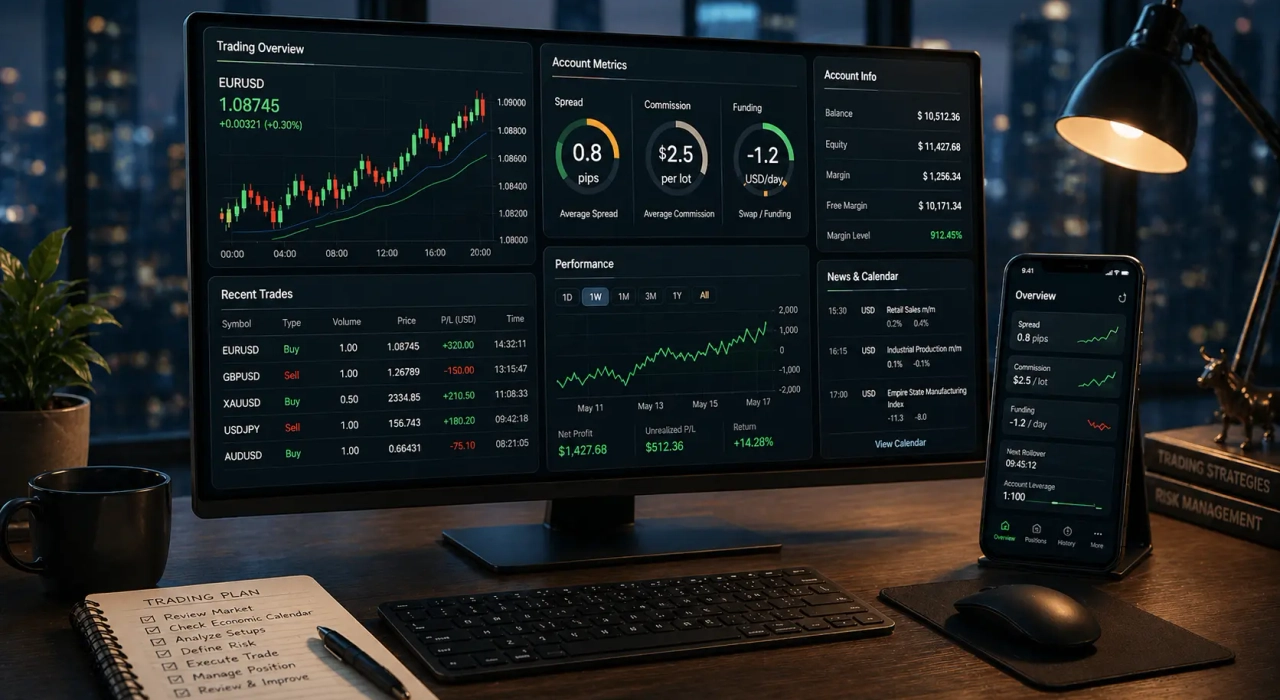
A good futures trading broker does not shout. It lets you focus on levels, timing, and risk while the platform handles plumbing with calm consistency. If your focus shifts from index futures to commodities, or from a micro contract to a CFD, it should still feel familiar.
It should feel like one language across different charts. The goal is not endless features. The goal is smooth flow, predictable costs, and statements that read like plain English.
“Cost clarity turns uncertainty into a trade you can choose.”
Futures, CFDs, and the lane that fits you
Futures are standardized exchange contracts with margin, tick values, and settlement rules you can look up. CFDs mirror an underlying price, often the active futures month, and settle through your broker rather than on an exchange. Many active traders keep both on the desk. Trade futures for clear transparency and long market hours. Use futures CFDs for flexible sizing, longer sessions, or portfolio changes without exchange data fees.
A claim like best broker for futures CFD is important only if the platform is honest. It should show contract specs in cash terms. Costs should be clear before you click.
What “flow” feels like in motion
- One ticket for every instrument, not a new ritual for each symbol
- Brackets attach with the entry so exits are not a debate
- Size, tick value, and estimated cost shown on the ticket in cash
- Depth of Market or an equivalent ladder to feel liquidity
- Alerts that fire a few minutes before a scheduled print, shown in your local time
If this reads boring, that is the point. Boring is a competitive advantage.
Quick map of common futures lanes
| Lane | Typical windows* | Drivers | Notes |
| Equity index futures | Cash session and 30 minutes around it | Earnings, breadth, macro prints | Fast opens, clean range breaks |
| Energy futures | Europe morning and US session | Inventories, OPEC tone, risk appetite | Accept slippage, size down on reports |
| Metals futures | London morning, US macro hours | Real rates, dollar tone | Pullback entries behave well on data days |
| Ags and softs | Contract specific | Weather, seasonality, reports | Read the calendar, respect limits |
*Windows vary by venue and season. Choose a slice that matches your life.
Cost lines that decide more than you think
| Cost or friction | Where it shows | Practical way to manage |
| Spread and tick size | Every fill | Favor liquid hours. Know tick values cold. |
| Commission | Exchange futures and CFDs | Size for your average ticket, not your best day. |
| Exchange, clearing, data | Exchange futures | Subscribe to only what you use. Reassess monthly. |
| Funding or overnight fees | CFDs held overnight | Know the schedule. Hold smaller or switch to futures. |
| Slippage | Opens and news minutes | Use limits on breaks, avoid chasing. |
Your “mental invoice” should match the statement by line and by feel.
“A tidy routine outperforms a clever hunch.”
What separates a helpful futures trading broker
- One ticket grammar across indices, energy, metals, and CFDs
- Cash based risk preview on the ticket before you click
- DOM or price ladder with clear tick values and position PnL
- Honest status page with timestamps and planned reverts
- Exportable logs that reconcile fills, commissions, and any slippage
A platform that can show risk in cash saves you from yourself on busy days.
Futures vs futures CFD at a glance
| Dimension | Exchange futures | Futures CFD |
| Venue | Central exchange order book | Broker routed OTC instrument mirroring futures |
| Data fees | Often required | Usually embedded, check policy |
| Sizing | Fixed contract sizes and micros | Flexible sizing, fractional exposure |
| Hours | Exchange schedule with extended sessions | Often mirrors futures, confirm details |
| Costs | Commission, exchange, clearing, market data | Spread, commission, funding, no exchange fees |
| Use case | Core trading, hedging, strict transparency | Flexible tactics, small accounts, off hours tweaks |
Choose tools for repeatable behavior, not ideology.
Opening a futures trading account without drama
A futures trading account should read like a checklist you understand in one sitting.
- Margin frameworks spelled out per contract, with example tickets
- Risk disclosures in plain language, not just legalese
- Funding options with timelines and fees listed clearly
- Statements that itemize exchange fees, clearing, commissions, and tax info
- A help center that includes screenshots of common order types and bracket logic
If the account is hard to open, it will be hard to operate. Friction has a way of repeating itself.
A day that proves the difference
Imagine a Tuesday. You flag a pullback on gold, drop a bracket, and step away from the urge to babysit. Ten minutes later, E-mini or a micro S&P breaks a tight range. You swap lanes without swapping mental models. The same hotkeys work. Risk shows in dollars before every click. Later, your statement mirrors your notes. Spread, commission, maybe a tiny slippage on the open, nothing hiding behind creative labels. That kind of day builds something more important than PnL. It builds trust.
Signals you picked the right partner
- You spend less time rearranging layouts and more time reviewing outcomes
- Alerts feel early and relevant rather than loud and late
- Your journal shrinks because the platform does the boring math
- Support answers with examples in the same language the platform speaks
- Withdrawals land on schedule and status notes match reality
“Trust lives in spreadsheets and status pages, not in taglines.”
Common mistakes and clean fixes
| Mistake | Why it hurts | Fix |
| Trading into scheduled reports by accident | Slippage and spread spikes | Preload a calendar with local times and alerts |
| Sizing from memory instead of cash | Drift into inconsistent risk | Use cash based sizing on the ticket and a fixed risk unit |
| Chasing first spikes at the open | High cost and regret | Prefer range break and retest or the first pullback |
| Mixing fees across venues without tracking | Confusing statements | Log total cost per trade for a month, then choose the efficient window |
Short list for the best broker for futures CFD candidates
Use this as a scorecard, not a slogan contest.
- CFD specs match the active futures month with clear roll behavior
- Tight spreads during core hours, believable during edges
- Funding schedule published with examples
- Brackets and OCO logic available on CFDs and exchange products alike
- Copyable or exportable logs for audits and tax tools
When those boxes are ticked, the phrase best broker for futures CFD begins to mean something practical.
FAQ
What makes a futures trading broker feel reliable day to day
One ticket language across symbols, cash based risk on the ticket, DOM or ladder support, clear statements, and real status notes. When those pillars hold, you can focus on setups instead of plumbing.
Do I need both exchange futures and futures CFDs
Not always. Many traders use exchange futures for their main trades. They use CFDs for smaller sizes, off-hours exposure, or when data fees are too high for their volume.
How do I choose a futures trading account tier
Match margin and fee structures to your average size and session. Pay for only the data you use. If a higher tier does not lower total cost per trade in your hours, skip it.
Will costs creep up as I add contracts and symbols
Costs rise only if you stop measuring. Track spread, commission, exchange fees, and slippage for 20 sessions. Keep the times and instruments that stay predictable.
Can mobile be safe for futures
Mobile is fine for edits and exits if size shows in cash and brackets are visible. Fast entries still feel safer on desktop around the open.
What is the simplest way to control risk
Pick a fixed cash risk per trade. Use brackets so stops and targets place with the entry. Limit yourself to two attempts per idea. End the session at a hard daily limit.
Community
Trading platforms
Services
Articles
Community
Trading platforms
Services




Copyright © 2026. All rights reserved.
There is a risk of loss in trading foreign currencies and it is not suitable for everyone. Tradeview is not responsible for any gains or losses on currency rates or exchanges during any transaction.
The services and products offered by Tradeview are not being offered within the United States (US) and not being offered to US Persons, as defined under US law. The information on this website is not directed to residents of any country where FX and/or CFDs trading is restricted or prohibited by local laws or regulations.
CFDs are complex instruments and come with a high risk of losing money rapidly due to leverage. 64% of retail investors' accounts lose money when trading CFDs with Tradeview. You should consider whether you understand how CFDs work and whether you can afford to take the high risk of losing your money.
Headquarters Tradeview Ltd.: 13 Genesis Close, 4th Floor, Suite 422, Cayman Islands
High Risk Warning: Foreign exchange trading carries a high level of risk that may not be suitable for all investors. Leverage creates additional risk and loss exposure. Before you decide to trade foreign exchange, carefully consider your investment objectives, experience level, and risk tolerance. You could lose some or all your initial investment; do not invest money that you cannot afford to lose. Educate yourself on the risks associated with foreign exchange trading and seek advice from an independent financial or tax advisor if you have any questions.
Advisory Warning: Tradeview provides references and links to selected blogs and other sources of economic and market information as an educational service to its clients and prospects and does not endorse the opinions or recommendations of the blogs or other sources of information. Clients and prospects are advised to carefully consider the opinions and analysis offered in the blogs or other information sources in the context of the client or prospect's individual analysis and decision making. None of the blogs or other sources of information is to be considered as constituting a track record. Past performance is no guarantee of future results and Tradeview specifically advises clients and prospects to carefully review all claims and representations made by advisors, bloggers, money managers and system vendors before investing any funds or opening an account with any Forex dealer. Any news, opinions, research, data, or other information contained within this website is provided as general market commentary and does not constitute investment or trading advice. Tradeview expressly disclaims any liability for any lost principal or profits without limitation which may arise directly or indirectly from the use of or reliance on such information. As with all such advisory services, past results are never a guarantee of future results.