Elevate Your Trading Portfolio Without Overtrading
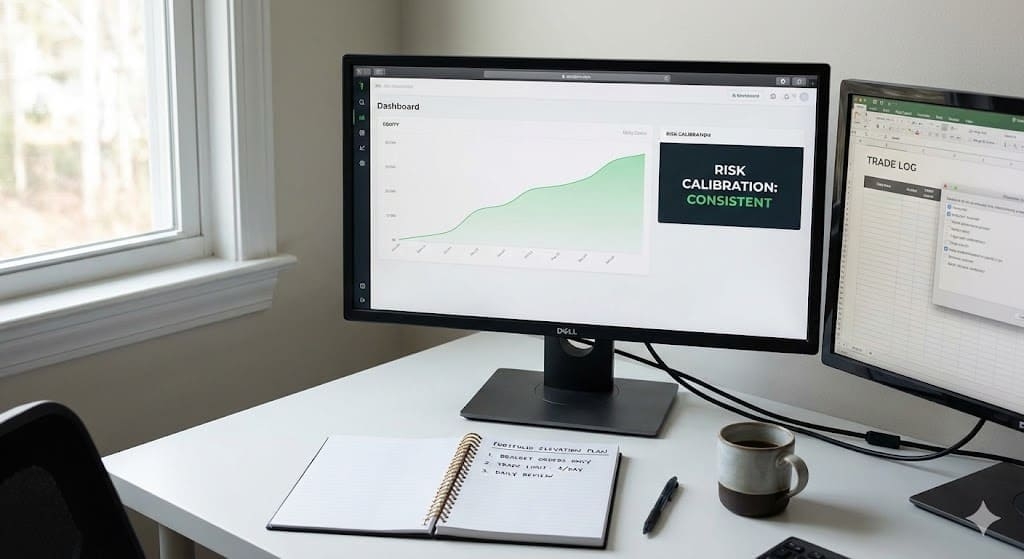
“Elevate” sounds like you need a new strategy, a new indicator set, or a new asset class. Most of the time, the quickest way to elevate your trading portfolio is less dramatic: tighten your process, improve execution consistency, and remove the small frictions that quietly damage results.
That is where the right tooling matters. A top trading platform is not the one with the loudest features. It is the one that helps you trade with speed and stability while keeping risk, reporting, and routine simple enough to follow on normal days.
“Performance improves when your process is easier to repeat than your impulses.” (Citation: trading journal)
This guide is a practical playbook: how to upgrade portfolio quality without chasing complexity, what platform characteristics actually matter, and a routine that turns “better tools” into measurable improvement.
The real meaning of “elevate your trading portfolio”
Portfolio improvement is not only about higher returns. It is also about:
- Smoother equity curve (fewer deep drawdowns)
- More consistent execution (fewer unforced errors)
- Better diversification (less hidden correlation)
- Cleaner decision-making (fewer emotional trades)
- Clearer measurement (knowing what is working)
A portfolio that “feels elevated” usually has fewer surprises. That comes from structure.
Three levers that move the needle fastest
- Risk calibration
Same edge, better sizing, better outcomes. - Execution quality
Lower slippage, fewer mistakes, fewer late entries. - Review loop
Faster learning, fewer repeated errors.
Most traders focus on lever 1 and ignore lever 2 and 3. That is a missed opportunity.
Why platform choice changes outcomes more than people admit
Even with the same strategy, platform friction can change behavior:
- You hesitate because order entry is clunky
- You skip stops because placing them is annoying
- You move stops impulsively because it is too easy
- You overtrade because the interface encourages constant action
- You misread margin because reporting is unclear
A top trading platform reduces these errors by making the right actions obvious and the wrong actions inconvenient.
“The platform is part of your strategy because it shapes your behavior.” (Citation: weekly review note)
Trade with speed and stability: what that should mean in practice
Speed is not only latency. “Trade with speed and stability” means your workflow stays reliable during the moments that matter:
- Session opens and closes
- Major economic releases
- Sudden volatility spikes
- Heavy volume windows
- Internet hiccups on your side
Stability is often the bigger edge. A fast platform that breaks under load is worse than a slightly slower platform that stays consistent.
Practical signs of stability
- Minimal disconnects and clean reconnection behavior
- Order acknowledgments are reliable and visible
- Clear error messages when something fails
- Consistent performance during peak sessions
- No “mystery fills” without traceable history
If you cannot audit what happened, you cannot learn from it.
The platform checklist that supports portfolio elevation
Here is a no-nonsense checklist. You can test most of it in a demo environment.
Order entry and risk controls
- Bracket orders or easy stop and target placement
- Position sizing visibility (risk in account currency)
- One-click reduce or close that does not misfire
- Cancel/replace that is clear and quick
- Alerts for key levels and margin thresholds
Reporting and review
- Exportable trade history (CSV)
- Clear fill prices, timestamps, and fees
- Easy tagging or notes (even basic is fine)
- Clean statements you can reconcile
Market access and reliability
- Stable data feed with minimal staleness
- Optime transparency or status communication
- Reliable mobile access (if you manage trades away from desk)
A quick scoring table
| Category | Question | Score 1-5 |
| Risk workflow | Can I place stop and target in under 10 seconds? | |
| Clarity | Can I see my true exposure instantly? | |
| Stability | Does it remain usable in peak volatility? | |
| Auditability | Can I export fills, fees, timestamps easily? | |
| Usability | Does it reduce mistakes instead of enabling them? |
A top trading platform usually scores well on auditability and risk workflow, not only on charts.
Elevate your trading portfolio by fixing the “unforced errors”
Before adding new markets, fix the mistakes that do not require new knowledge.
Common unforced errors
- Inconsistent position sizing
- Missing stops or moving stops emotionally
- Trading outside your best hours
- Taking setups that are not in your playbook
- Too many correlated positions
- Ignoring fees and slippage in performance review
A better platform helps, but only if you pair it with rules.
“Your edge leaks through inconsistency, not through lack of indicators.” (Citation: risk journal)
A portfolio structure that stays manageable
To elevate your trading portfolio, define what you are actually running. Many traders accidentally run a random mix of ideas.
The core and satellite model
- Core allocation: the strategies and instruments you understand best
- Satellite allocation: small experiments with strict limits
This prevents “everything is an experiment,” which is where discipline disappears.
A simple example allocation
| Bucket | Purpose | Example risk cap |
| Core strategy | Main execution edge | 70% of total risk budget |
| Diversifier | Non-correlated exposure | 20% |
| Experiment | New idea or market | 10% |
Risk cap means maximum share of your total risk budget, not account value. This keeps experimentation from quietly becoming the main portfolio.
A routine that turns speed and stability into results
Tools do not improve portfolios. Routines do. Here is a routine that uses a platform’s strengths without encouraging constant activity.
Daily pre-market (10–15 minutes)
- Mark key levels and scenarios
- Check the economic calendar for major releases
- Define a “no trade” rule for your personal schedule
- Set alerts instead of staring at screens
Execution window (60–120 minutes)
- Take only A-quality setups
- Hard cap on number of trades (example: 2–5)
- Place stops and targets immediately
- Avoid resizing after wins or losses
Post-session review (10 minutes)
- Screenshot trades
- Log result in R
- Grade rule-following (A/B/C)
- Write one improvement for tomorrow
This is the fastest way to improve while keeping trading boring enough to be sustainable.
“Small reviews beat big regrets.” (Citation: weekly recap)
Measuring whether you are actually improving
If you want to know whether you elevated your portfolio, track process metrics, not only profit.
Three metrics that reveal real progress
- Rule-following rate
How many trades are A-grade? - Average loss size vs planned loss
Are your losses close to what you intended, or are they routinely larger? - Slippage and cost awareness
Do you know your average spread/fees per trade, and does it change by time of day?
A strong platform makes these metrics easier to track. That is part of “trade with speed and stability” in practice: the ability to audit your own behavior.
Platform-driven mistakes to watch for
Even good platforms can encourage bad habits if you are not careful.
- Too many indicators because they are available
- Too many alerts because they are easy to set
- Too many trades because one-click entry feels effortless
- Constant monitoring because the feed never stops
Countermeasure: build a checklist and a trade limit. If your platform can enforce limits or alerts, use them.
Practical examples of portfolio elevation without adding risk
Example 1: Same strategy, better execution
A trader keeps the same setup but starts using bracket orders every time. Missed stops drop to near zero. Drawdowns shrink even if win rate stays the same.
Example 2: Fewer trades, higher quality
A trader limits trades to two per day and only during one high-focus window. They stop chasing noise. Profit factor improves because low-quality trades disappear.
Example 3: Cleaner diversification
A trader realizes their “diverse” positions were all risk-on. They cap correlated exposure and add a true diversifier. Volatility of returns drops.
These are not flashy changes, but they are common ways traders genuinely elevate portfolios.
Next step before the FAQ
If you want to elevate your trading portfolio, start by selecting one top trading platform you can rely on to trade with speed and stability, then run a two-week process upgrade: bracket orders on every trade, fixed risk per trade, a trade limit per session, and a 10-minute daily review. If your rule-following rate and average loss discipline improve, portfolio performance usually improves next, because you removed the unforced errors that quietly capped your results.
FAQ
Does switching to a top trading platform automatically improve results?
No. A better platform reduces friction and mistakes, but improvement comes when you pair it with consistent risk rules and review habits.
What does trade with speed and stability mean for everyday traders?
It means reliable order placement, clear confirmations, stable connectivity during volatile windows, and the ability to audit fills and costs without confusion.
What is the fastest way to elevate your trading portfolio?
Fix unforced errors: consistent sizing, stops on every trade, fewer low-quality entries, and a weekly review loop. These changes often matter more than a new strategy.
How many instruments should I trade while improving my process?
Fewer is better. One to three instruments is usually enough while you build consistency. Add more only after your rule-following rate is stable.
How do I know if my platform is causing mistakes?
If you frequently place wrong sizes, delay stops, misread margin, or struggle to export trade history, the platform is adding friction that shows up in performance.
Should I prioritize speed or stability when choosing a platform?
Stability first. Speed matters, but consistent execution and clear audit trails usually produce better long-term outcomes than a small latency advantage.
Community
Trading platforms
Services
Articles
Community
Trading platforms
Services




Copyright © 2026. All rights reserved.
There is a risk of loss in trading foreign currencies and it is not suitable for everyone. Tradeview is not responsible for any gains or losses on currency rates or exchanges during any transaction.
The services and products offered by Tradeview are not being offered within the United States (US) and not being offered to US Persons, as defined under US law. The information on this website is not directed to residents of any country where FX and/or CFDs trading is restricted or prohibited by local laws or regulations.
CFDs are complex instruments and come with a high risk of losing money rapidly due to leverage. 64% of retail investors' accounts lose money when trading CFDs with Tradeview. You should consider whether you understand how CFDs work and whether you can afford to take the high risk of losing your money.
Headquarters Tradeview Ltd.: 13 Genesis Close, 4th Floor, Suite 422, Cayman Islands
High Risk Warning: Foreign exchange trading carries a high level of risk that may not be suitable for all investors. Leverage creates additional risk and loss exposure. Before you decide to trade foreign exchange, carefully consider your investment objectives, experience level, and risk tolerance. You could lose some or all your initial investment; do not invest money that you cannot afford to lose. Educate yourself on the risks associated with foreign exchange trading and seek advice from an independent financial or tax advisor if you have any questions.
Advisory Warning: Tradeview provides references and links to selected blogs and other sources of economic and market information as an educational service to its clients and prospects and does not endorse the opinions or recommendations of the blogs or other sources of information. Clients and prospects are advised to carefully consider the opinions and analysis offered in the blogs or other information sources in the context of the client or prospect's individual analysis and decision making. None of the blogs or other sources of information is to be considered as constituting a track record. Past performance is no guarantee of future results and Tradeview specifically advises clients and prospects to carefully review all claims and representations made by advisors, bloggers, money managers and system vendors before investing any funds or opening an account with any Forex dealer. Any news, opinions, research, data, or other information contained within this website is provided as general market commentary and does not constitute investment or trading advice. Tradeview expressly disclaims any liability for any lost principal or profits without limitation which may arise directly or indirectly from the use of or reliance on such information. As with all such advisory services, past results are never a guarantee of future results.