Lightspeed Trading: Maximizing Profits in the Stock Market
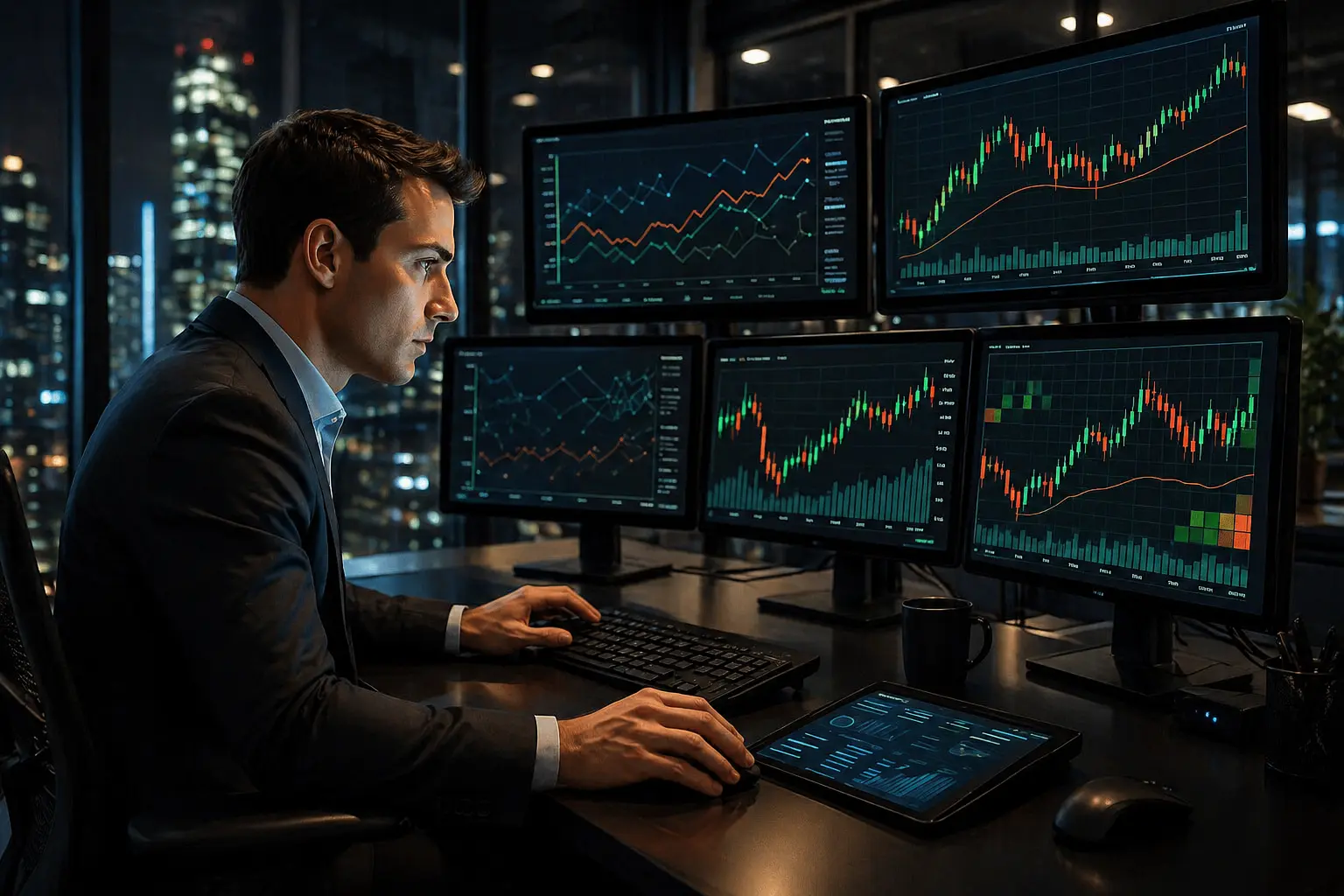
The Power of Lightspeed Trading: Optimizing Revenue in the Stock Market is a high-frequency trading approach that uses cutting-edge algorithms and technology to execute trades extremely quickly. Professional traders and institutional investors like this strategy. They need quick execution to take advantage of short-lived market opportunities.
To make sure trades happen in milliseconds, Lightspeed uses advanced software and fast internet connections. This is different from traditional trading methods, which can be slow due to manual processes.
- Lightspeed allows for high-speed stock market trading, maximizing profits through quick and efficient trades.
- Understanding lightspeed is essential for investors and traders looking to take advantage of its benefits in the stock market.
- The advantages of lightspeed trading include faster execution, lower costs, and access to advanced trading tools and platforms.
- Lightspeed can help maximize profits in the stock market by providing real-time market data and the ability to capitalize on market movements.
- Leveraging lightspeed technology enables traders to execute trades faster and more efficiently, giving them a competitive edge in the market.
This feature enables traders to respond quickly to changes in the market, which makes it a crucial tool in the quick-paced financial world of today. Lightspeed is based on the use of co-location services & direct market access (DMA). By eliminating middlemen, DMA enables traders to place orders directly on the exchange, greatly cutting down on latency. To further reduce latency, co-location entails positioning trading servers close to exchange servers. Because of this, traders can execute a lot of trades with little slippage, which is essential for sustaining profitability in a market that is extremely competitive.
For anyone wishing to trade lightspeed to comprehend these elements. Lightspeed trading’s ability to profit from transient price changes is one of its main benefits. Being able to enter and exit positions quickly can lead to big profits in a market where prices change a lot. A trader who places a buy order just before a stock price spike can make profits. These profits are hard to get with slower trading strategies. This speed not only boosts profit potential, but it also helps traders manage risk. They can quickly cut losses if a trade does not go as planned. Also, compared to conventional trading techniques, lightspeed trading frequently has cheaper transaction fees.
Many brokers offer lightspeed trading platforms. These platforms are helpful for active traders who make many trades each day. Lightspeed appeals to both novice & experienced stock market participants due to its cost effectiveness and potential for larger returns. In addition to speed, lightspeed requires strategic decision-making to maximize profits. Real-time data analytics & market indicators allow traders to spot trends and make well-informed decisions nearly instantly. To identify a breakout pattern in a stock’s price movement, for instance, a trader may employ technical analysis tools and place a trade before the wider market notices.
Also, a variety of trading strategies that can improve profitability can be implemented through lightspeed trading. Strategies like scalping help traders make money from small price changes during the day. They work well in fast trading environments. Lightspeed trading can be a powerful tool for improving returns in the stock market. It lets traders make many trades with low risk. This can help them earn significant profits over time. With the constant advancement of lightspeed trading technology, traders can now access ever-more-advanced tools to improve their trading skills. Trading platforms are increasingly incorporating sophisticated algorithms and machine learning models to enable automated decision-making based on massive data sets.
By reducing human error, this technology not only expedites trade execution but also enhances accuracy. Also, a lot of lightspeed trading platforms provide interfaces that can be customized to meet the needs of individual traders. With the help of features like one-click trading, sophisticated charting tools, and real-time news feeds, traders can act quickly and decisively in response to market developments. Trades can be executed more effectively and efficiently by traders by utilizing these technological advancements, which will ultimately improve financial results. Although there are many benefits to lightspeed trading, there are also consequences for market liquidity & volatility. By enabling more market transactions, high-frequency trading can, on the one hand, help to boost liquidity.
By helping to reduce bid-ask spreads, this surge of trades can facilitate investors’ purchases & sales of securities without having a major effect on prices. However, quick trade execution can increase volatility, especially when the market is under stress. For example, price changes can get worse when many trades happen quickly during important news events or economic announcements. In the 2010 Flash Crash, high-frequency trading played a significant role in the sharp decline in stock prices that occurred in a matter of minutes.
In connection to general market behavior requires traders to comprehend these dynamics. To succeed in lightspeed trading, traders must make strong plans. These plans should use their speed advantage and manage risk well. Algorithmic trading systems, which are capable of analyzing market conditions and executing trades based on predetermined criteria, are one useful tactic. Traders can take advantage of opportunities even when they are not actively watching the markets thanks to these systems’ ability to run continuously. Using a combination of technical analysis and news sentiment analysis is another effective strategy.
Traders can find possible reasons for price changes. They can adjust their positions by looking at price charts and news updates. To benefit from the expected price increase, a trader might buy shares before a company releases earnings reports. These reports are expected to exceed what analysts predict. Even with its benefits, lightspeed trading has drawbacks. The possibility of overtrading, in which traders make too many trades in a short amount of time, raising transaction costs and possibly resulting in losses, is a major worry.
If traders want to avoid this trap, they must set clear rules about how often they should trade and follow them. Dependence on technology also increases the risk of connectivity problems or system failures. Traders may be unable to execute crucial trades at crucial times due to a sudden loss of internet access or a broken trading platform.
To reduce these risks, traders should plan for emergencies. They can have backup internet connections and easy access to other trading platforms. In summary, lightspeed trading offers many opportunities to increase stock market profits. However, it also has downsides that need careful consideration. Traders can successfully leverage the potential of lightspeed trading while managing its inherent risks by comprehending the technology at play and creating sensible strategies.
FAQs
What is Lightspeed Trading?
Lightspeed Trading is a high-speed stock trading platform that provides investors and traders with fast and efficient access to the stock market. It offers advanced trading technology and tools to execute trades quickly and take advantage of market opportunities.
How does Lightspeed Trading work?
Lightspeed Trading works by providing traders with direct market access and low-latency trading technology. This allows traders to execute trades at lightning-fast speeds, take advantage of price movements, and maximize profits in the stock market.
What are the advantages of Lightspeed Trading for investors and traders?
Lightspeed Trading has many benefits. It offers fast trade execution and access to advanced trading tools. Users get low-latency market data. This allows them to take advantage of short-term market opportunities.
How can Lightspeed Trading help maximize profits in the stock market?
Lightspeed Trading can help maximize profits in the stock market by allowing traders to execute trades quickly, take advantage of price movements, and capitalize on short-term market opportunities.
How can traders leverage Lightspeed Trading technology for faster and more efficient trades?
Traders can leverage Lightspeed Trading technology for faster and more efficient trades by using advanced order types, direct market access, and low-latency trading platforms to execute trades with minimal delay.
What is the impact of Lightspeed Trading on market volatility and liquidity?
Lightspeed Trading can impact market volatility and liquidity by providing traders with the ability to execute trades quickly, which can contribute to short-term price movements and market liquidity.
What are some strategies for success using Lightspeed Trading to gain an edge in the stock market?
To succeed with Lightspeed Trading, use high-frequency trading strategies. Also, use advanced order types. Stay updated on market news and events to take advantage of short-term opportunities.
What are the risks and considerations when using Lightspeed Trading in the stock market?
Risks and considerations when using Lightspeed Trading include the potential for increased market volatility, the need for a solid understanding of trading technology, and the importance of managing risk and trade execution carefully.
Community
Trading platforms
Services
Articles
Community
Trading platforms
Services




Copyright © 2026. All rights reserved.
There is a risk of loss in trading foreign currencies and it is not suitable for everyone. Tradeview is not responsible for any gains or losses on currency rates or exchanges during any transaction.
The services and products offered by Tradeview are not being offered within the United States (US) and not being offered to US Persons, as defined under US law. The information on this website is not directed to residents of any country where FX and/or CFDs trading is restricted or prohibited by local laws or regulations.
CFDs are complex instruments and come with a high risk of losing money rapidly due to leverage. 64% of retail investors' accounts lose money when trading CFDs with Tradeview. You should consider whether you understand how CFDs work and whether you can afford to take the high risk of losing your money.
Headquarters Tradeview Ltd.: 13 Genesis Close, 4th Floor, Suite 422, Cayman Islands, KY1-1110
High Risk Warning: Foreign exchange trading carries a high level of risk that may not be suitable for all investors. Leverage creates additional risk and loss exposure. Before you decide to trade foreign exchange, carefully consider your investment objectives, experience level, and risk tolerance. You could lose some or all your initial investment; do not invest money that you cannot afford to lose. Educate yourself on the risks associated with foreign exchange trading and seek advice from an independent financial or tax advisor if you have any questions.
Advisory Warning: Tradeview provides references and links to selected blogs and other sources of economic and market information as an educational service to its clients and prospects and does not endorse the opinions or recommendations of the blogs or other sources of information. Clients and prospects are advised to carefully consider the opinions and analysis offered in the blogs or other information sources in the context of the client or prospect's individual analysis and decision making. None of the blogs or other sources of information is to be considered as constituting a track record. Past performance is no guarantee of future results and Tradeview specifically advises clients and prospects to carefully review all claims and representations made by advisors, bloggers, money managers and system vendors before investing any funds or opening an account with any Forex dealer. Any news, opinions, research, data, or other information contained within this website is provided as general market commentary and does not constitute investment or trading advice. Tradeview expressly disclaims any liability for any lost principal or profits without limitation which may arise directly or indirectly from the use of or reliance on such information. As with all such advisory services, past results are never a guarantee of future results.