Please note that deposits and withdrawals via Bitwallet are no longer available. Please use alternative methods going forward.
What Is a CFD Broker?
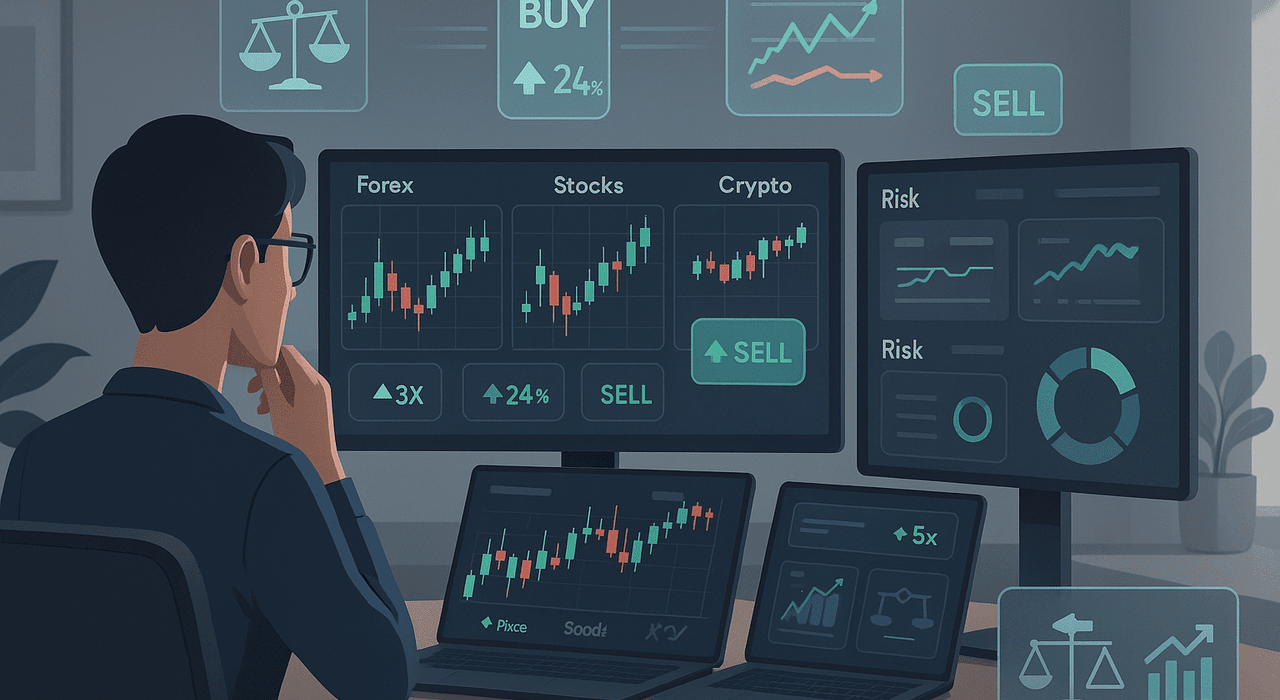
In the world of online trading, one term you will often come across is “CFD broker.” But what exactly is a CFD broker?
CFD stands for Contract for Difference. It is a type of derivative trading where traders speculate on the price movements of global financial markets.
A CFD broker is a platform that facilitates this type of trading. It provides the necessary tools and resources for traders to buy and sell CFDs effectively.
Choosing the right CFD broker can significantly affect your trading experience. It can influence everything from the variety of markets you can access to the fees you pay and even the safety of your funds.
This article aims to demystify the concept of a CFD broker. It will guide you through the complexities of CFD trading and help you understand how to choose the best CFD broker for your needs.
What Is a CFD Broker and How Does CFD Trading Work?
A CFD broker is an entity that offers a platform for traders to trade CFDs. These brokers provide the tools needed to speculate on the price movements of different assets without actually owning them.
CFDs, or contracts for difference, allow traders to gain or lose money based on price changes. They work by taking a position on whether the price of an asset will rise or fall.
CFD trading operates across several financial instruments, such as stocks, currencies, indices, commodities, and cryptocurrencies. This variety allows investors to diversify their portfolios.
Some of the main functions of a CFD broker include:
- Providing access to efficient and secure trading platforms.
- Offering competitive pricing and low spreads.
- Facilitating analytical and risk management tools.
- cProtecting client funds through appropriate security measures.
The process of trading CFDs begins with selecting an asset. Then, the trader decides whether to open a buy or sell position. Positions are held according to the investor’s strategy, whether short-term or long-term.
It is important to highlight that in CFD trading, the underlying assets are not purchased. This creates the possibility of using leverage, increasing the potential for both profits and losses.
Leverage allows traders to increase their market exposure with less initial capital. However, this also increases risk, so it must be handled carefully.
The Importance of Choosing a Regulated CFD Broker
Selecting a regulated CFD broker is crucial for the safety of your investment. Regulated brokers must meet strict financial and operational standards. This provides an additional layer of protection for investors.
Regulation requires brokers to keep client funds separate from their own assets. This ensures that, in the event of insolvency, client funds remain protected. It also helps prevent misuse of funds by the broker.
cBy choosing a regulated broker, you also benefit from fair and ethical procedures. Regulatory bodies such as the FCA or CySEC monitor brokers to ensure they provide a transparent trading environment. This includes fair order execution practices and clear policies regarding commissions and spreads. Making sure your broker is regulated is a sensible measure to reduce risk and improve your trading experience.
Benefits of CFD Trading
CFD trading offers several advantages that attract investors of all levels. One of its main strengths is flexibility. It allows traders to speculate under different market conditions, whether prices are rising or falling.
Another significant advantage of CFD trading is access to a wide range of global markets. This includes stocks, indices, currencies, commodities, and cryptocurrencies. Such variety allows traders to diversify their portfolios and take advantage of opportunities in different sectors.
Some of the benefits of CFD trading include:
- Access to global markets with a single account.
- Ability to trade in rising and falling markets.
- Use of leverage to increase exposure.
- No need to own the underlying asset.
- cFlexible trade sizes.
These benefits make CFD trading an attractive option for many people, as long as it is done with a well-defined strategy and a clear awareness of the risks.
Understanding Leverage in CFD Trading
Leverage is a powerful tool in CFD trading. It allows traders to increase their market exposure without needing to pay the full value of the trade. This mechanism can amplify profits, but it also increases the risk of losses.
For example, with leverage of 1:10, a trader can control a $10,000 position with only $1,000 of capital. This means that a small change in the asset’s price can have a significant impact on the account balance. Therefore, it is crucial to understand how leverage works and use it responsibly.
To manage the risks associated with leverage, traders should implement proper risk management strategies. This may include using stop-loss orders to limit potential losses. In addition, traders must be aware of their risk tolerance and only invest what they are willing to lose.
Risks Associated with CFD Trading
CFD trading presents several risks that traders must consider. One of the most critical risks is market volatility. Asset prices can fluctuate rapidly, potentially leading to significant losses.
Another risk factor is the use of leverage. While leverage can amplify profits, it can also significantly increase losses. It is essential for traders to understand how it works before using it.
There is also the risk of position liquidation. If the market moves against the trader, the broker may automatically close positions. This can lead to the total loss of the invested capital. For these reasons, it is vital to implement risk management strategies and use tools such as stop-loss orders to protect capital.
How to Evaluate and Choose the Best CFD Broker
Choosing the best CFD broker can make a major difference in your trading experience. It is crucial to consider several factors before making a decision. Evaluating these aspects will help you find the broker that best fits your needs.
First, check the broker’s regulations. A regulated CFD broker gives you greater protection and compliance with standards. Regulation is essential for transparency and the safety of funds.
Next, pay attention to commissions and spreads. The costs associated with trades can affect your profits. It is advisable to choose brokers that offer competitive spreads and low commissions.
A good broker should also offer efficient and user-friendly trading platforms. The availability of advanced tools and clear charts is essential. Also, make sure the platform is compatible with your preferred devices.
Consider customer service and reviews from other traders. Responsive support can be crucial when technical issues arise. Here is a list of key features to evaluate:
Broker regulation and security.
Commissions, spreads, and hidden costs.
Trading platform and available tools.
Quality of customer service and technical support.
Reputation and reviews from other traders.
By considering these factors, you will be able to find the CFD broker that best suits your needs and trading style.
Trading Tools and Resources Offered by CFD Brokers
CFD brokers do more than provide platforms for placing trades. They also offer tools and resources that support analysis and decision-making. These resources can be highly useful for both beginners and experienced traders.
A quality broker provides access to various analysis tools. These tools include charts, technical indicators, and economic calendars. Such resources are essential for developing effective trading strategies.
In addition, many brokers offer educational materials to improve your trading skills. Training resources include videos, webinars, and tutorials. These materials help traders better understand the market.
Below is a list of common tools offered by CFD brokers:
Advanced and customizable charts.
Technical indicators for market analysis.
Economic calendars and event alerts.
Educational materials and tutorials.
Webinars and discussion groups.
Access to real-time market news and analysis.
Choosing a broker that offers these tools can significantly improve your trading experience and your chances of success.
The Importance of Demo Accounts in CFD Trading
Demo accounts are crucial for traders in the world of CFD trading. They provide a risk-free environment to practice strategies without putting real money at risk. This is especially beneficial for beginners who want to become familiar with a broker’s platform.
In addition, demo accounts allow traders to experiment with different financial instruments. With them, traders can test trading tactics before applying them in the real market. This helps improve analytical skills and emotional control during trades. It also helps build confidence and discipline throughout the trading process.
Customer Service and Technical Support in CFD Brokers
Customer service is vital in CFD trading. A good CFD broker offers fast and reliable assistance to resolve technical issues. The availability of 24-hour support is crucial for traders operating across different time zones.
Likewise, effective technical support helps users better understand trading platforms and how they work. Quality customer service can make a major difference. It gives investors security and confidence during critical moments. It also ensures a smooth and uninterrupted trading experience.
Diversity of Financial Instruments in CFD Trading
One of the main advantages of CFD trading is the wide diversity of available financial instruments. Traders can access global markets such as stocks, forex, indices, commodities, and cryptocurrencies. This variety allows investors to diversify their portfolios.
Diversifying across different instruments helps manage risk and maximize opportunities. CFDs allow traders to operate in both rising and falling markets. This provides flexibility and multiple investment strategies, adapted to market conditions and each trader’s personal goals.
Risk Management Strategies in CFD Trading
In CFD trading, risk management is crucial to protect your capital. Using stop-loss orders is an effective strategy to limit losses. Stop-loss orders automatically close a position if the market moves against it.
In addition, it is important not to risk more than 1–2% of total capital on a single trade. Keeping leverage low can help prevent disproportionate losses. Diversifying investments across different markets also helps reduce overall risk. Take a disciplined approach and adjust strategies according to market volatility.
Conclusion: The Importance of a Clear Investment Strategy
Having a clear investment strategy is essential when trading CFDs. Without a roadmap, impulsive decisions can lead to costly mistakes. A well-defined strategy helps establish realistic goals and measure progress.
It also prepares you to face market fluctuations with confidence. It is vital to review and adjust your strategy regularly to adapt to new data and trends. This allows for more informed and effective decision-making, improving your chances of success in the world of CFD trading.
Community
Trading platforms
Services
Articles
Community
Trading platforms
Services




Copyright © 2026. All rights reserved.
There is a risk of loss in trading foreign currencies and it is not suitable for everyone. Tradeview is not responsible for any gains or losses on currency rates or exchanges during any transaction.
The services and products offered by Tradeview are not being offered within the United States (US) and not being offered to US Persons, as defined under US law. The information on this website is not directed to residents of any country where FX and/or CFDs trading is restricted or prohibited by local laws or regulations.
CFDs are complex instruments and come with a high risk of losing money rapidly due to leverage. 64% of retail investors' accounts lose money when trading CFDs with Tradeview. You should consider whether you understand how CFDs work and whether you can afford to take the high risk of losing your money.
Headquarters Tradeview Ltd.: 13 Genesis Close, 4th Floor, Suite 422, Cayman Islands
High Risk Warning: Foreign exchange trading carries a high level of risk that may not be suitable for all investors. Leverage creates additional risk and loss exposure. Before you decide to trade foreign exchange, carefully consider your investment objectives, experience level, and risk tolerance. You could lose some or all your initial investment; do not invest money that you cannot afford to lose. Educate yourself on the risks associated with foreign exchange trading and seek advice from an independent financial or tax advisor if you have any questions.
Advisory Warning: Tradeview provides references and links to selected blogs and other sources of economic and market information as an educational service to its clients and prospects and does not endorse the opinions or recommendations of the blogs or other sources of information. Clients and prospects are advised to carefully consider the opinions and analysis offered in the blogs or other information sources in the context of the client or prospect's individual analysis and decision making. None of the blogs or other sources of information is to be considered as constituting a track record. Past performance is no guarantee of future results and Tradeview specifically advises clients and prospects to carefully review all claims and representations made by advisors, bloggers, money managers and system vendors before investing any funds or opening an account with any Forex dealer. Any news, opinions, research, data, or other information contained within this website is provided as general market commentary and does not constitute investment or trading advice. Tradeview expressly disclaims any liability for any lost principal or profits without limitation which may arise directly or indirectly from the use of or reliance on such information. As with all such advisory services, past results are never a guarantee of future results.