Please note that deposits and withdrawals via Bitwallet are no longer available. Please use alternative methods going forward.
Gateway to Multi-Asset Trading for Smarter Portfolios
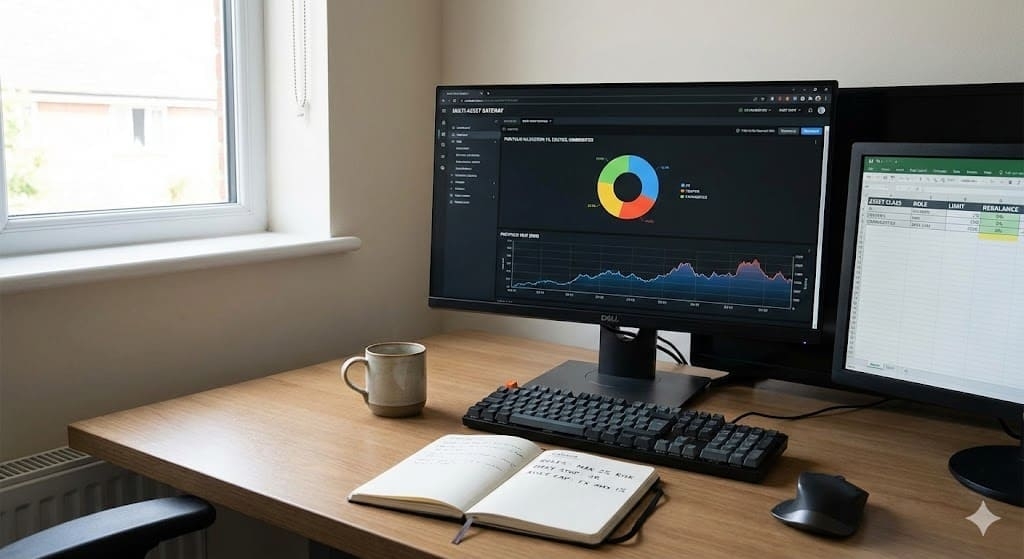
A gateway to multi-asset trading is basically your way of accessing different markets from one place, so you can build a portfolio that is not tied to a single story. In practice, it means you can combine instruments like FX, stocks, indices, commodities, and sometimes crypto, then manage them with one set of rules instead of juggling separate accounts and inconsistent workflows.
The appeal is obvious: more choice, more flexibility, and a clearer path to risk control. The downside is also real: more moving parts, more ways to overtrade, and more chances to build a portfolio that looks diversified but behaves like one big bet.
“Diversification is not the number of tickers. It is the number of different risk drivers.”
This guide keeps it practical: how multi-asset access can reduce single-market stress, how to select instruments that actually diversify, and how to use a platform for all your trading goals without turning it into a screen-filled hobby.
Multi-asset access in plain terms
Multi-asset is less about “having more charts” and more about building better options for decision-making.
A simple example:
- If FX is choppy and spreads widen during your usual session, you may have no clean setups.
- If you can also trade indices or a liquid stock basket, you might find a clearer trend with better structure.
- If your equity exposure is high, you might hedge with FX or commodities rather than panic-selling.
That is the real benefit: you can respond to conditions with tools that fit, instead of forcing trades in the only market you have.
Multi-asset vs multi-position
It is easy to confuse these:
- Multi-position: lots of trades in the same asset class (often highly correlated).
- Multi-asset: exposure across asset classes with different drivers.
Five tech stocks can still behave like one theme. One index plus one commodity plus one FX pair can behave more independently, depending on the environment.
Build the portfolio of your dreams without building a mess
The phrase build the portfolio of your dreams sounds inspiring, but a “dream portfolio” is mostly just a portfolio you can stick with. That requires three things:
- A purpose for each asset class
- Limits that prevent accidental concentration
- A schedule for review and rebalancing
Here is a clean way to design it: treat each asset class like a job role.
Asset classes and the job they can do
| Asset class | “Job” in a portfolio | Typical strength | Common mistake |
| Stocks / ETFs | Growth engine | Long-term compounding | Overconcentration in one sector |
| FX | Tactical hedging or short-term opportunities | Liquidity, macro themes | Overleveraging small moves |
| Indices | Broad market exposure | Simplicity, diversification | Trading noise during chop |
| Commodities | Inflation and cycle exposure | Non-equity risk driver | Ignoring event risk and seasonality |
| Bonds (where available) | Stability and ballast | Lower volatility in many regimes | Expecting steady gains in all rate environments |
The point is not to trade everything. The point is to assign a role so each piece has a reason to exist.
“A portfolio is a set of roles, not a collection of ideas.”
The hidden value of one platform
Using a platform for all your trading goals can reduce friction in ways that are easy to underestimate:
- One reporting view instead of scattered statements
- Consistent risk sizing rules
- Unified watchlists and alerts
- Fewer transfers between accounts that delay decisions
It can also create a new problem: convenience can encourage overtrading. When everything is one click away, discipline has to be a design choice.
A quick platform checklist that supports discipline
Look for features that make good behavior easy:
- Clear position sizing and risk display per trade
- Bracket orders (entry + stop + target) across asset classes
- Exposure view by asset class and correlation cluster
- Exportable history for journaling and review
- Alerts that reduce screen-staring
And be cautious with features that can encourage impulse:
- One-click entries without confirmations
- Constant social feeds or “hot” lists that trigger FOMO
- Gamified leaderboards that reward volume
Diversification that actually diversifies
Many portfolios look diversified on paper but move together when stress hits. Multi-asset access helps only if you choose exposures with different drivers.
A simple diversification test
Ask two questions:
- What causes this asset to move most of the time?
- Does that driver overlap with the rest of my portfolio?
If your answers are the same across positions, you have variety, not diversification.
A practical “driver map” example
| Exposure | Primary drivers | Overlaps with | Notes |
| US equities index | Growth expectations, rates, risk sentiment | Tech-heavy stocks | Broad exposure but still risk-on |
| Gold | Real rates, risk-off demand, inflation expectations | Sometimes overlaps, sometimes diversifies | Behavior changes by regime |
| USDJPY | Interest rate differentials, risk sentiment | Equities (often) | Can hedge or amplify depending on regime |
| Energy commodity | Supply shocks, geopolitics, cycle | Inflation themes | Often moves differently than equities |
This is not perfect science. It is a practical way to stop pretending that “more positions” equals “less risk.”
Risk rules that keep multi-asset trading from turning chaotic
A gateway to multi-asset trading gives you more tools. Your risk plan decides whether that is a benefit or a liability.
Three rules that scale well
1) Portfolio heat limit
Total open risk across all trades capped at a fixed amount (example: 2R or 3R). This prevents stacking positions across markets that all lose together.
2) Asset-class caps
Limit how much risk is allocated to each asset class (example: no more than 50 percent of open risk in FX).
3) Correlation awareness rule
If two positions are highly correlated in your experience, treat them like one. Reduce size or pick one.
Here is a simple template:
| Rule type | Example limit | Why it helps |
| Risk per trade | 0.5% of account | Keeps mistakes affordable |
| Portfolio heat | Max 2% open risk | Prevents piling on |
| Asset-class cap | Max 1% open risk in FX | Avoids leverage creep |
| Daily loss limit | Stop at 2R | Prevents spirals |
“Multi-asset access only helps if your risk rules travel with you.”
Cost control across markets
Costs show up differently in different asset classes:
- FX: spreads and swaps
- Equities: commissions (sometimes) and slippage
- Indices and commodities (CFDs or derivatives): spread, financing, and session effects
The big idea is consistency: you want predictable cost behavior during your trading window, not just “low costs in a brochure.”
A cost awareness table you can maintain
| Market | Main costs | Easy way to monitor | Common trap |
| FX | Spread, swap | Track spread range by hour | Trading thin hours |
| Stocks | Commission, spread, slippage | Compare fills to mid-price | Chasing illiquid names |
| Indices | Spread, financing | Watch spread percentiles | Trading at open chaos |
| Commodities | Spread, event moves | Note calendar events | Ignoring inventory reports |
If you are building longer-term positions, costs matter differently than if you scalp. The point is to know what you are paying and when.
A portfolio blueprint that stays realistic
Let’s ground this in a practical model. Imagine someone with a medium risk tolerance who wants growth but hates large drawdowns.
Example portfolio roles
- Core: broad equity ETF exposure
- Diversifier: a commodity or gold allocation
- Tactical: limited FX positions for macro themes or hedging
- Cash buffer: to reduce forced selling during volatility
A sample allocation could look like:
| Bucket | Purpose | Example allocation |
| Core equities | Long-term growth | 60% |
| Diversifier | Reduce single-driver risk | 15% |
| Tactical FX | Opportunistic, small size | 5% |
| Bonds/cash | Stability and flexibility | 20% |
This is not a recommendation. It is a structure. The strength is that each bucket has a job and a risk limit.
The rebalancing habit that makes it work
Multi-asset portfolios drift. Rebalancing is how you keep your intended risk profile.
A simple schedule:
- Weekly: check exposures and correlation clusters
- Monthly: rebalance back to target ranges
- Event-based: rebalance after major regime shifts (rate changes, major trend breaks)
Rebalancing is not about perfection. It is about preventing your winners from quietly turning into your whole portfolio.
Common mistakes with multi-asset platforms
Mistake 1: Turning “access” into “obligation”
Just because you can trade everything does not mean you should. Many people perform better by specializing in one or two markets and using others only when conditions are clean.
Mistake 2: Hidden leverage creep
FX and derivatives can add leverage subtly. You might feel diversified while your risk is concentrated through leverage.
A quick guardrail: review your portfolio as if every position moves against you on the same day. If that scenario feels catastrophic, the risk is too high.
Mistake 3: Correlation surprises
During market stress, correlations often rise. Assets that “usually” diversify may move together temporarily.
Practical response:
- Keep a cash buffer
- Limit portfolio heat
- Avoid stacking trades that share the same driver
Mistake 4: No review loop
A platform can track data, but you still need a routine:
- Weekly review of wins and losses by asset class
- Notes on which environments helped or hurt
- Small changes, one at a time
“If you never review, you will repeat the same mistake with a new symbol.”
Next step before the FAQ
If you want a gateway to multi-asset trading to help you build the portfolio of your dreams, the best starting move is to define the jobs you want each asset class to do, then set two risk limits you will not break: portfolio heat and asset-class caps. Once that is written, choose a platform for all your trading goals that makes stops, sizing, and reporting easy, and run a 21-day test with just a few instruments so you can see whether your process stays calm under normal stress; if you share your time horizon, preferred markets, and risk tolerance, I can draft a one-page portfolio roles template and a weekly review checklist tailored to your setup.
FAQ
Does multi-asset access automatically improve diversification?
No. It improves your options, but diversification depends on selecting exposures with different drivers and keeping correlation in mind, especially during volatile periods.
Best way to prevent overtrading on a multi-asset platform?
Use portfolio heat limits, a trade cap per session, and a short watchlist. Convenience can trigger impulsive behavior, so friction and rules matter.
Is a single platform safer than multiple accounts?
It can be simpler operationally, but safety depends on regulation, custody, controls, and your own risk practices. Simplicity helps, but it is not a guarantee.
Should beginners trade multiple asset classes right away?
Usually not. Start with one or two markets, build execution habits, then add a diversifier. Complexity too early often delays progress.
How often should a multi-asset portfolio be rebalanced?
Many people use monthly rebalancing with weekly checks, plus event-based adjustments after major regime changes. The goal is to manage drift, not chase perfection.
Metrics that matter most for a multi-asset trader
Portfolio drawdown, exposure by asset class, correlation clusters, and average loss versus planned loss. Those show whether your structure is working.
Community
Trading platforms
Services
Articles
Community
Trading platforms
Services




Copyright © 2026. All rights reserved.
There is a risk of loss in trading foreign currencies and it is not suitable for everyone. Tradeview is not responsible for any gains or losses on currency rates or exchanges during any transaction.
The services and products offered by Tradeview are not being offered within the United States (US) and not being offered to US Persons, as defined under US law. The information on this website is not directed to residents of any country where FX and/or CFDs trading is restricted or prohibited by local laws or regulations.
CFDs are complex instruments and come with a high risk of losing money rapidly due to leverage. 64% of retail investors' accounts lose money when trading CFDs with Tradeview. You should consider whether you understand how CFDs work and whether you can afford to take the high risk of losing your money.
Headquarters Tradeview Ltd.: 13 Genesis Close, 4th Floor, Suite 422, Cayman Islands
High Risk Warning: Foreign exchange trading carries a high level of risk that may not be suitable for all investors. Leverage creates additional risk and loss exposure. Before you decide to trade foreign exchange, carefully consider your investment objectives, experience level, and risk tolerance. You could lose some or all your initial investment; do not invest money that you cannot afford to lose. Educate yourself on the risks associated with foreign exchange trading and seek advice from an independent financial or tax advisor if you have any questions.
Advisory Warning: Tradeview provides references and links to selected blogs and other sources of economic and market information as an educational service to its clients and prospects and does not endorse the opinions or recommendations of the blogs or other sources of information. Clients and prospects are advised to carefully consider the opinions and analysis offered in the blogs or other information sources in the context of the client or prospect's individual analysis and decision making. None of the blogs or other sources of information is to be considered as constituting a track record. Past performance is no guarantee of future results and Tradeview specifically advises clients and prospects to carefully review all claims and representations made by advisors, bloggers, money managers and system vendors before investing any funds or opening an account with any Forex dealer. Any news, opinions, research, data, or other information contained within this website is provided as general market commentary and does not constitute investment or trading advice. Tradeview expressly disclaims any liability for any lost principal or profits without limitation which may arise directly or indirectly from the use of or reliance on such information. As with all such advisory services, past results are never a guarantee of future results.